Меню
Hair Loss After COVID-19
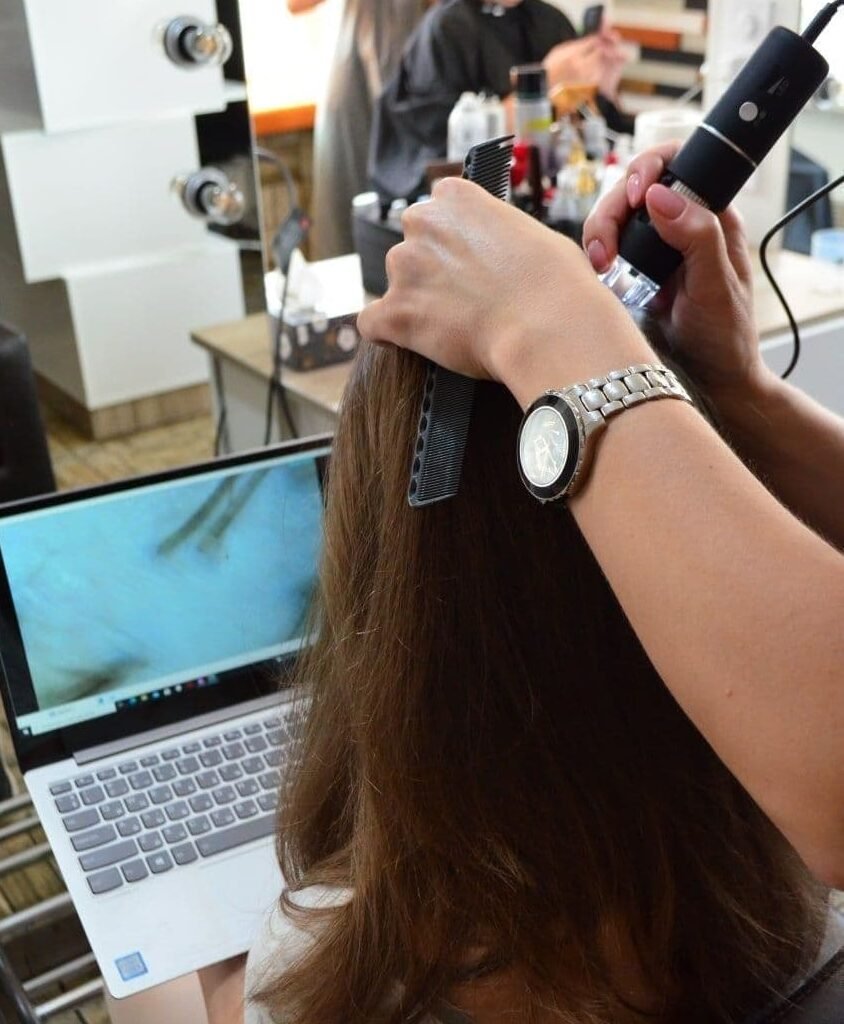
People recovering from COVID-19 often need to restore their overall health through proper nutrition, physical activity, and, when necessary, medication. Hair, as one of the systems affected by the illness, can also experience significant stress. As a result, active hair loss may occur.
The visible “shedding” process usually begins 2.5–3 months after the illness. This is approximately the amount of time hair needs for the initial trigger to result in visible hair loss.
What happens to the hair during this period?
During illness, the hair follicle may receive reduced stimulation and nutritional support. As a result, the follicle can enter a resting phase, and the hair becomes detached from the dermal papilla. However, it may remain in the scalp for some time before eventually shedding.
Any significant change from your usual lifestyle can potentially contribute to hair loss. The main triggers include:
- COVID-19 — although the exact mechanisms are still being studied, an association with increased hair shedding has been observed.
- Starting or discontinuing contraceptives.
- Changes in diet and normalization of gastrointestinal function.
- Stress, both negative and positive.
- Taking medications, particularly antibiotics.
- Prolonged elevated body temperature or fever.
- General or, in some cases, local anesthesia.
Hair loss and scalp disorders are among the concerns addressed by trichologists. They help identify possible causes and recommend an appropriate course of action.
A trichologist, even when highly qualified, may not be authorized to prescribe certain medications. If prescription treatment or a biopsy is required to establish a complete diagnosis, the patient may be referred to a gastroenterologist, gynecologist, endocrinologist, or dermatologist for a more detailed evaluation and treatment if the underlying problem goes beyond what can be addressed by a trichologist alone.
What can a trichologist recommend?
After performing a trichoscopy and identifying the problem, a trichologist may recommend professional salon procedures and an appropriate home-care routine.
Hair-growth stimulation and strengthening are usually part of a comprehensive approach that may include shampoos, ampoules, serums, oils, lotions, and other products.
One shampoo alone cannot solve the problem, but it should be selected correctly, especially if the client has already begun treatment.
IMPORTANT: Hair regrowth is not a quick process. From the beginning of treatment to visible results in the hair, it may take approximately 2–3 months. A course may include 6–12 procedures, performed at intervals of approximately 10–12 days.
At our salon, you can receive a trichology consultation and select the appropriate treatment.
A specialist can determine the type of hair loss — androgenetic, diffuse, or focal (patchy) alopecia — and identify a number of scalp conditions, including seborrheic dermatitis, psoriasis, and dandruff.